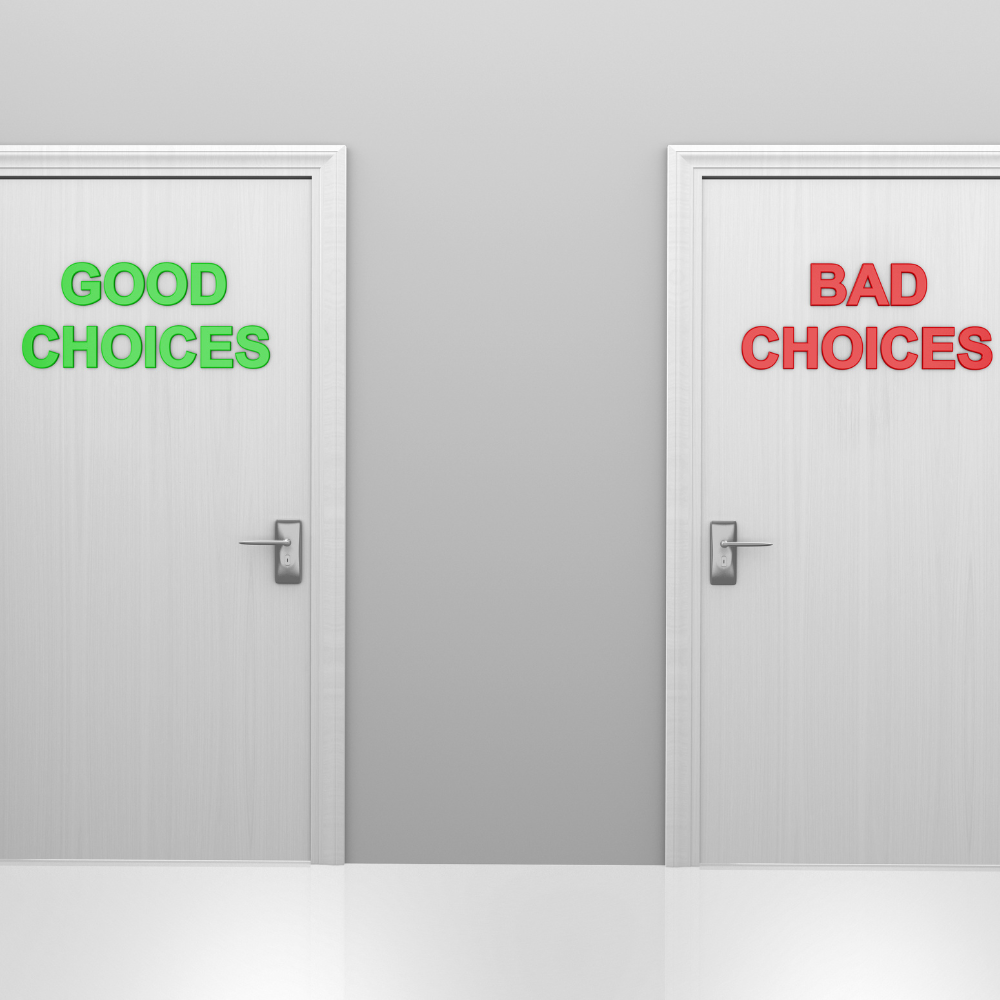
Have you ever looked back at a choice and thought, “What was I thinking?” Maybe it was something small—like spending money you didn’t really have. Or maybe it was big—like staying in the wrong relationship, walking away from an opportunity, or ignoring your gut… again.
You’re not alone.
We’ve all made decisions that left us full of regret.
But if bad decisions feel like a pattern, not just the odd mistake, it’s time to stop beating yourself up—and start understanding what’s really going on.
Let’s gently explore why you might be making choices that don’t serve you, and how to shift that pattern for good.
First: You’re Not Broken
Let’s get one thing straight—you’re not stupid, selfish, or weak. If you keep making choices that hurt you, there’s always a reason behind it. It’s not because you don’t care. It’s because something deeper is at play.
Your past. Your habits. Your fears. Your nervous system.
These all shape the way you respond to life—and sometimes, they drive decisions before you’ve even realised what’s happening.
You don’t need to shame yourself into changing.
You need to understand yourself into growing.
What Counts as a “Bad” Decision?
A “bad” decision isn’t always obvious in the moment. Sometimes it’s only with hindsight that you realise something was off.
You might:
Keep saying “yes” when you mean “no”
Stay in jobs or relationships that drain you
Avoid decisions altogether until life chooses for you
Act on impulse and deal with the consequences later
Procrastinate until everything blows up
Keep chasing short-term relief over long-term peace
If any of this resonates, you’re not alone. These patterns are more common than you think. And the good news is: they can be changed.
So Why Do You Keep Making Decisions That Don’t Serve You?
You’re Operating from Fear, Not Freedom
Fear is sneaky. It whispers things like:
“What if I fail?”
“What will they think?”
“I’ll be alone if I leave.”
“I can’t cope if I choose wrong.”
So instead of choosing what’s best for you, you pick what feels “safe.” But safety isn’t the same as happiness. And fear-driven decisions usually lead you further away from your truth.
You Don’t Trust Yourself
If you’ve been criticised, manipulated, or traumatised in the past, you may second-guess your instincts. You might think:
“I can’t make good choices.”
“I always mess things up.”
“Someone else would know better than me.”
When self-trust is low, you hand your power over to others—or avoid making decisions altogether.
You’re Stuck in Old Conditioning
Sometimes, the decisions you’re making aren’t even yours. They come from childhood messages, society, culture, or family expectations.
“You must always put others first.”
“Success means money.”
“Being alone means you’ve failed.”
So you make choices that align with someone else’s values—not your own. It’s no wonder they leave you feeling empty.
You’re Addicted to Quick Relief
Bad decisions often come from the need for fast comfort:
Scrolling social media instead of facing the task
Saying yes to avoid conflict
Overspending for a dopamine hit
Running back to toxic people for familiar comfort
But comfort and healing aren’t the same. One soothes you. The other strengthens you.
You’re Tired or Overwhelmed
When your brain is stressed or exhausted, it struggles to weigh up options properly. You go into “default mode”—which is often the path of least resistance. That’s why good sleep, food, and emotional rest matter.
You’re Being Manipulated
When someone else is constantly making decisions for you—through control, guilt, or subtle manipulation—it chips away at your confidence without you even realising. You learn to keep the peace instead of speaking up. You start asking yourself, “What would they want?” instead of “What do I need?” Over time, your own voice gets quieter. You become so used to being guided—or pushed—that making your own choices starts to feel unsafe or selfish. But that’s not the truth. That’s conditioning. And it’s exhausting. Reclaiming your power isn’t about becoming defiant—it’s about remembering you’re allowed to have preferences, boundaries, and a life that reflects who you are. You don’t need permission to take up space.
You're an Addict
When you’re living with addiction—whether to drugs, alcohol, or both—your brain’s ability to make clear, balanced decisions can become clouded. The cycle of craving, using, and crashing takes a huge toll, mentally and physically. You stop thinking about long-term consequences and start chasing short-term relief. In that state, survival becomes the priority—not what’s best for you. That’s not weakness. It’s how your nervous system tries to cope. But the truth is, your brain and body need space to heal before they can help you choose differently. That’s why recovery isn’t just about stopping. It’s about rebuilding your strength, your clarity, and your sense of self—step by step.
How to Start Making Better Decisions (That Actually Feel Good Later)
You don’t need to overhaul your life overnight. Big change starts with small, conscious steps. Here’s how to begin.
Pause Before You Choose
Most bad decisions happen in a rush. If you can pause—even just for a few minutes—you create space for your wiser self to speak.
Ask yourself:
“What am I feeling right now?”
“Is this a decision made from fear or love?”
“Will this move me closer to who I want to be?”
You’ll be amazed how often that tiny pause changes the outcome.
Check In With Your Body
Your gut is smarter than you think. Your body reacts before your brain catches up. If something feels tight, heavy, rushed, or sickening—it’s probably not right.
If it feels calm, warm, light, and open—it usually is.
Practice noticing your body’s cues. It will become your most honest compass.
Practice Small Acts of Self-Trust
You don’t rebuild confidence all at once. You do it choice by choice.
Start small:
Pick your outfit based on what you like, not what you think others expect
Choose what to eat based on what feels good in your body
Say no to one thing that drains you
Each aligned decision builds the muscle of trust—and your future self will thank you.
Use the 10/10/10 Rule
When stuck, ask yourself:
How will I feel about this in 10 minutes?
In 10 weeks?
In 10 years?
This helps you zoom out and see the bigger picture.
That text you want to send? That purchase you’re about to make? That relationship you’re avoiding ending?
Looking ahead helps you think like your highest self, not your panicked one.
Be Gentle with Past You
Regret can haunt us. But every past decision was made with the awareness you had at the time.
You did the best you could with what you knew, what you had, and how safe you felt. Forgive that version of you.
Better decisions don’t come from punishment. They come from compassion.
Slow Down to Speed Up
In a fast world, slowness is a superpower. Before every major decision, try:
Sleeping on it
Writing your thoughts down
Talking it through with someone safe
Going for a walk to clear your head
Clarity rarely comes in chaos. Slow decisions often lead to strong outcomes.
Get Curious, Not Critical
Instead of asking:
“Why do I always mess up?”
Ask:
“What part of me felt unsafe there?”
“What was I needing in that moment?”
“What might I try differently next time?”
Curiosity turns mistakes into lessons. And that’s where growth begins.
Build a Decision-Making Toolkit
Some tools to support your process:
Pros and Cons List – but include how each option makes you feel
Values Check-In – does this align with what matters most to you?
Intuition vs Impulse – learn the difference (intuition feels calm; impulse feels urgent)
You don’t need to guess your way through life. You can equip yourself.
When It’s More Than Just “Bad Decisions”
Sometimes, making repeated poor choices isn’t just about being impulsive or distracted. It can be a sign that something deeper is going on beneath the surface.
Patterns of self-sabotage often trace back to unhealed trauma, undiagnosed ADHD, anxiety, addiction, or long-standing people-pleasing habits. These challenges can quietly shape the way you see yourself, the world, and what you believe you deserve.
You might feel like you’re always reacting, never fully in control—caught in a cycle of regret, guilt, and “why did I do that again?”
But here’s the truth:
You’re not broken. You’re not weak.
You’ve just been coping the best way you know how. And that deserves compassion, not criticism.
If you feel stuck in that loop—repeating choices that don’t serve you, no matter how much you want to change—talking to a therapist can make all the difference. Therapy isn’t about fixing you. It’s about understanding you, helping you uncover the “why” behind your actions, and giving you the tools to respond differently.
Seeking support doesn’t mean you’ve failed.
It means you’re taking your healing and your future seriously.
There is courage in reaching out.
There is power in asking for help.
And there is hope in knowing that things can change—even if they haven’t yet.
You don’t have to do this alone.
Final Thoughts: You Can Choose Again
Every moment is a chance to choose again.
Even now.
Even after all the regrets.
Even if you don’t feel ready.
Better decisions aren’t about being perfect.
They’re about being present. Being honest. Being kind to yourself.
So the next time you feel that old pull to people-please, to rush, to avoid, or to escape—pause. Breathe. Check in.
And remind yourself:
“I get to choose differently now.”
Because you do. And you’re ready.